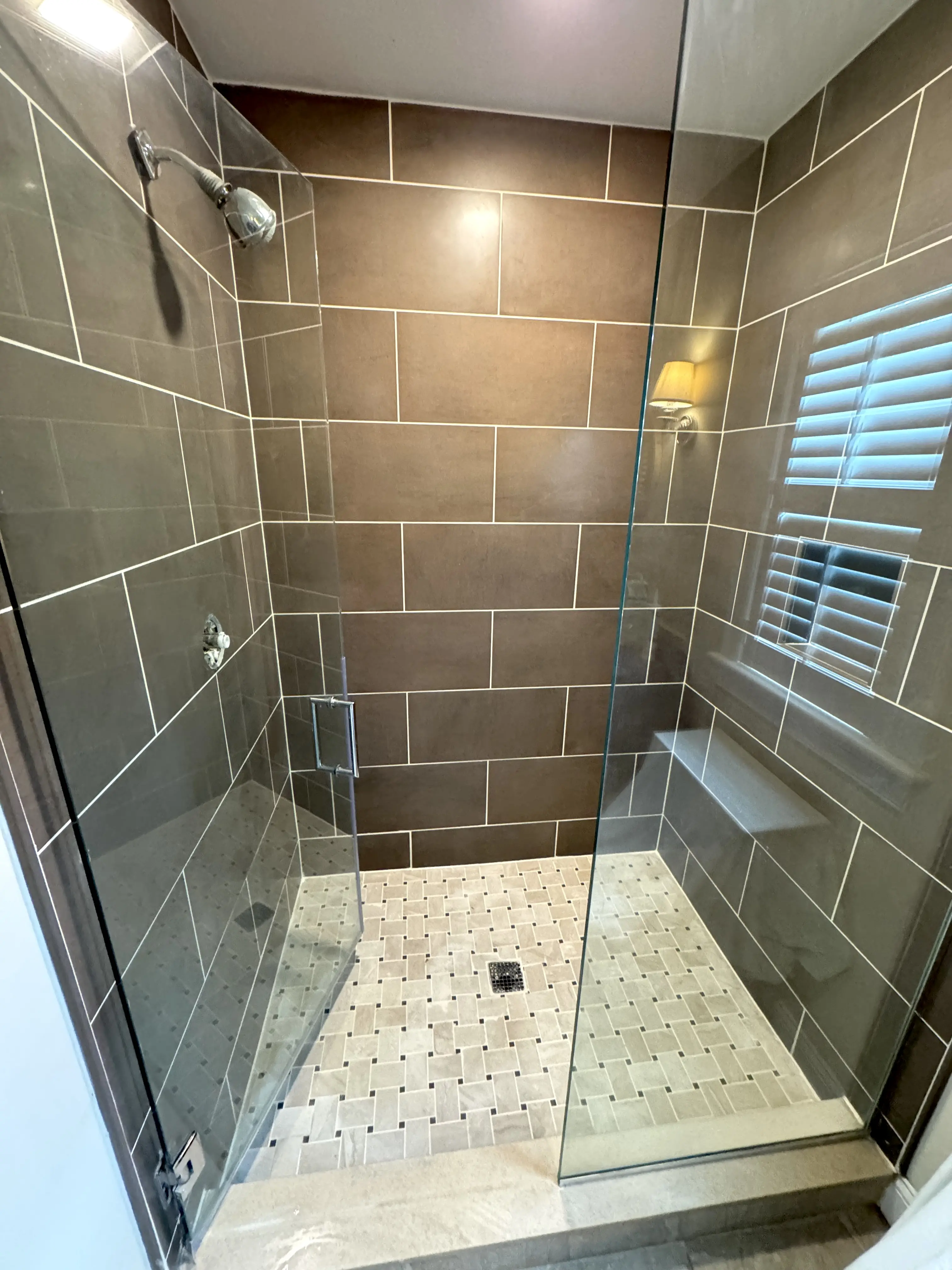
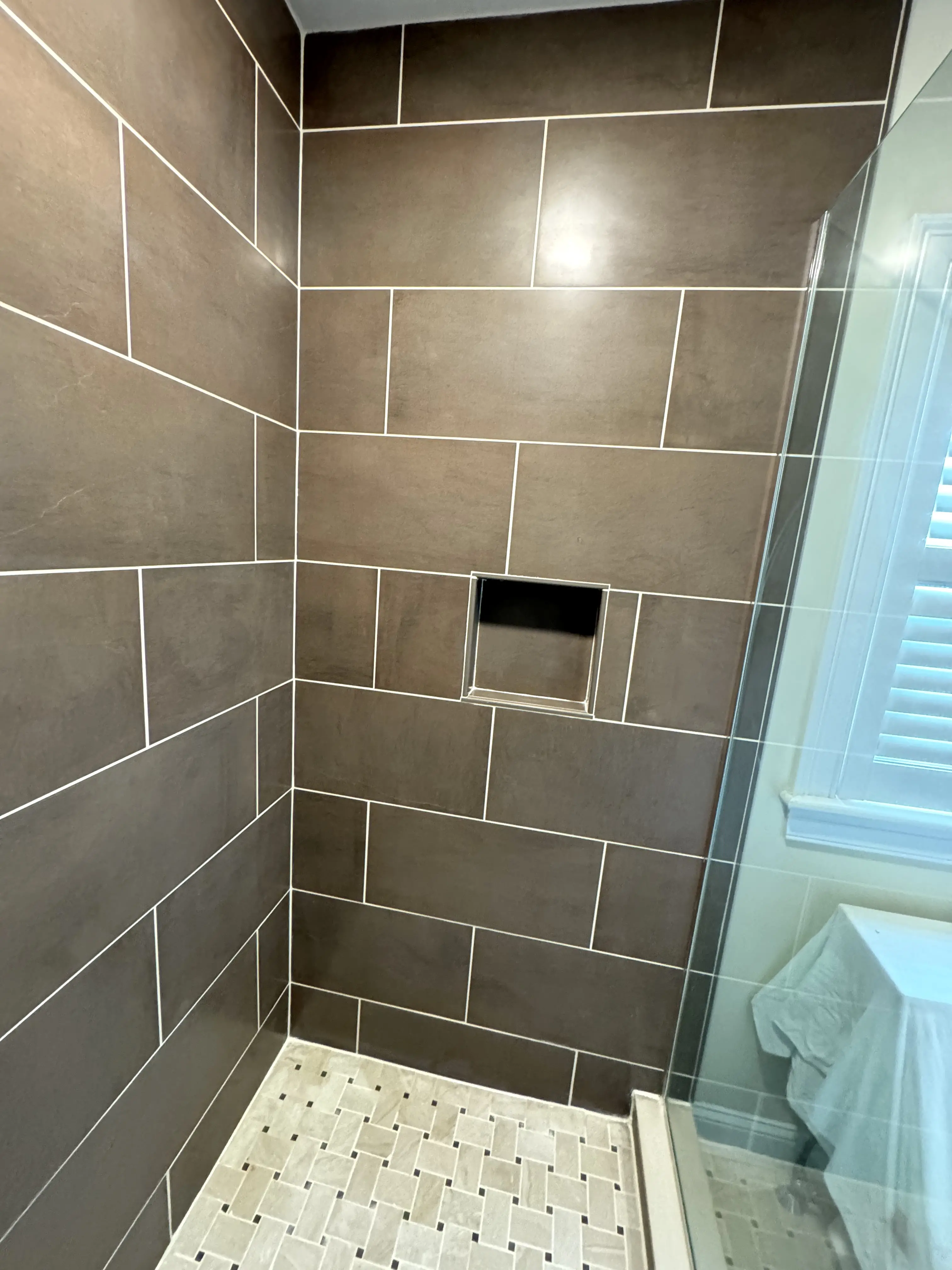
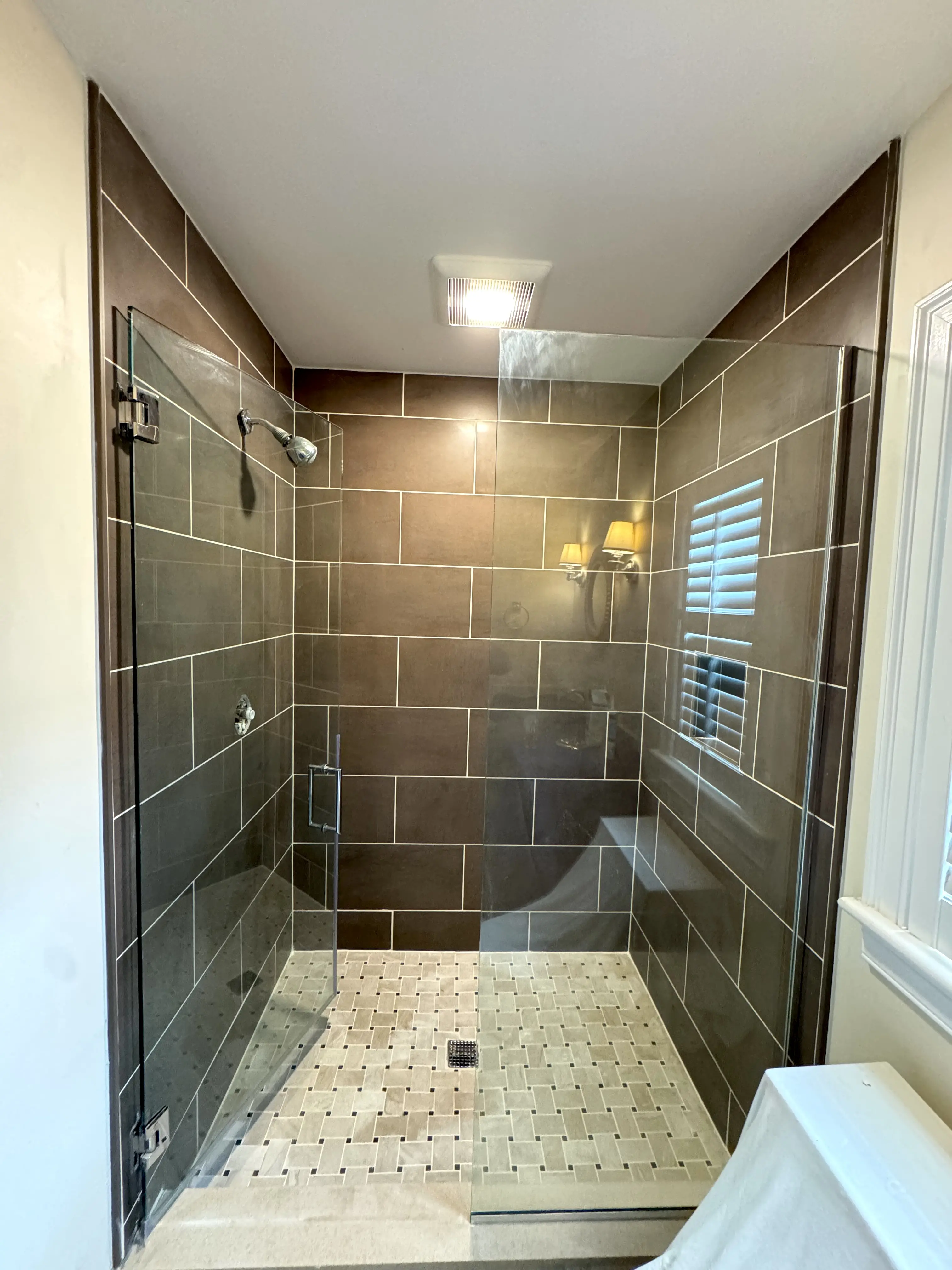
Loose tile
Moving or hollow tile can indicate bond, substrate, or moisture problems that require evaluation and may make regrouting an unsuitable repair.
Cape Cod Grout Repair
Restore deteriorated grout joints, refresh the appearance of existing tile, and improve long-term durability.
OB Remodeling repairs damaged grout joints in showers, bathroom walls, floors, backsplashes, and other tiled areas throughout Cape Cod. Loose or deteriorated grout is removed before new grout is installed to create clean, consistent joints and restore the finished appearance.

Not every tiled surface requires replacement.
Grout can wear, crack, discolor, or loosen over time because of age, cleaning, minor movement, moisture exposure, or original installation conditions. Cracked grout does not always mean the surrounding tile assembly has failed, and suitable grout repair can restore clean, consistent joints.
Regrouting or shower regrouting may improve the appearance and serviceability of stable tiled surfaces. However, bathroom grout repair is not appropriate when tile is loose, the substrate is damaged, movement is extensive, or the waterproofing assembly has failed; those conditions may require tile replacement or broader corrective work.
The written estimate defines the suitable joints, surfaces, materials, and repair limits included in the project.
Grout replacement begins with determining whether the surrounding tile assembly is stable enough for repair. Optional joint, tile, caulk, or sealing work is listed separately when it is appropriate and included in the approved scope.
Inspect failed grout, surrounding tile, movement areas, moisture indicators, changes of plane, and visible conditions to determine whether regrouting is appropriate.
Carefully remove approved loose, cracked, or deteriorated grout from suitable joints to the depth required for the selected replacement material.
Remove loose residue and prepare the approved joints so replacement grout can be installed against clean, suitable surfaces within the repair area.
Install compatible replacement grout in prepared joints with attention to consistent filling, joint finish, surrounding tile, color selection, and cleanup requirements.
Replace approved flexible sealant at suitable corners, transitions, or changes of plane where silicone is required instead of rigid grout.
Clean repaired surfaces, remove project debris, complete approved punch-list items, and review curing guidance, care recommendations, and documented repair limitations.
Select the closest suitable replacement color while recognizing that aged, stained, or previously cleaned grout may not accept an exact invisible match.
Remove and replace approved failed shower silicone at corners, curbs, fixture transitions, or perimeter joints when surrounding conditions remain suitable.
Evaluate visibly loose or moving tile and surrounding conditions to determine whether localized replacement or broader corrective work is the appropriate recommendation.
Replace limited damaged tile when matching material is available and the accessible substrate, surrounding installation, waterproofing, and repair area remain suitable.
Replace approved deteriorated caulk at suitable tile edges, countertops, fixtures, backsplashes, or perimeter transitions using a compatible flexible sealant.
Apply an appropriate sealer when recommended for the selected grout or stone, following product requirements, curing time, surface preparation, and maintenance limitations.
Five focused stages from inspection through final cleanup and curing guidance.
Review grout condition, surrounding tile, movement, moisture indicators, changes of plane, repair limits, and whether regrouting is appropriate.
Protect adjacent tile and carefully remove approved loose, cracked, or deteriorated grout and failed sealant from suitable repair areas.
Remove loose residue and prepare the approved joints so replacement materials can bond to clean, suitable surfaces within the repair scope.
Fill prepared joints with compatible replacement grout and install approved flexible silicone at suitable corners, transitions, or changes of plane.
Clean the repaired tile, complete approved details, inspect finished joints, and review curing time, care recommendations, and known repair limitations.
We'll inspect the installation and recommend repair or replacement.
Repair Evaluation
Regrouting is most appropriate when the tile and supporting assembly remain stable and deterioration is limited to repairable joints.
A professional evaluation helps separate normal joint wear from conditions grout replacement cannot correct. The written estimate identifies suitable repair areas and any visible limitations.
Open or partially empty joints may be repairable when surrounding tile remains secure and the underlying assembly shows no broader failure.
Limited cracking may support repair after evaluating movement, location, surrounding joints, changes of plane, and whether the condition is recurring.
Full-area regrouting may refresh persistent discoloration when cleaning is insufficient and the existing tile installation remains otherwise suitable.
Small areas of loose or worn grout may be candidates for targeted repair when adjacent joints and tile remain stable.
Deteriorated flexible sealant at suitable corners, curbs, and transitions can be removed and replaced as a defined repair item.
Regrouting can improve the appearance of stable tilework, although color variation and existing wear may prevent a completely new appearance.
New grout cannot correct movement, damaged construction, or a failed waterproofing assembly behind the visible tile surface.
Moving or hollow tile can indicate bond, substrate, or moisture problems that require evaluation and may make regrouting an unsuitable repair.
Soft materials, staining, swelling, recurring moisture, or damaged framing may require opening the assembly and correcting the underlying condition.
Deteriorated backer, subfloor, mortar, or supporting construction cannot be restored by replacing grout in the visible surface joints.
Grout is not the waterproofing layer, so a failed shower membrane or base generally requires broader corrective work rather than regrouting.
Widespread cracking or repeated tile damage may indicate movement or support problems that should be addressed before finish repairs are considered.
Recurring joint cracks, shifting tile, or movement across multiple areas usually calls for investigating and correcting the complete installation assembly.
When the surrounding tile assembly remains stable, regrouting can restore serviceable joints without replacing an otherwise suitable installation.
Removing deteriorated material and installing new grout can refresh suitable tiled surfaces and create a more consistent, finished overall appearance.
Proper joint preparation and replacement remove loose residue and worn material, leaving defined grout lines that are easier to maintain.
Timely repair can extend the useful life of a stable tile installation when deterioration is limited to suitable grout or sealant joints.
When regrouting is genuinely appropriate, repairing serviceable joints can cost less and cause less disruption than replacing the complete tile assembly.
A completed shower joint restoration from the existing OB Remodeling portfolio.
Serving homeowners throughout Barnstable County.
Repair suitability and project availability are reviewed for tiled areas across Cape Cod. Explore nearby service-area pages and request a written evaluation for your property.
Common questions before repairing grout or silicone in a shower, bathroom, floor, backsplash, or other tiled area.
Sometimes. Repair suitability depends on the crack location, surrounding tile, movement, moisture indicators, joint depth, and whether the cracking reflects a broader assembly problem.
We can select the closest suitable color, but existing grout changes with age, moisture, stains, and cleaning, so an exact invisible match cannot be guaranteed.
Yes, suitable failed silicone joints at approved corners, curbs, fixtures, or transitions can be removed and replaced when surrounding conditions remain appropriate.
Surface staining may improve with cleaning or regrouting, but recurring growth or moisture can indicate conditions that require broader evaluation before a repair is recommended.
Regrouting is not a guaranteed leak repair because tile and grout are not the primary waterproofing system. Failed membranes, bases, drains, or penetrations require corrective work.
Curing time depends on the grout, silicone, temperature, humidity, and product requirements. We provide project-specific guidance before the shower returns to service.
Replacement may be recommended when tile is loose or broken, movement is extensive, the substrate is damaged, or the waterproofing assembly has failed.
No. Regrouting is appropriate only when the tile and supporting assembly remain sufficiently stable and the visible conditions do not indicate broader construction or waterproofing failure.

Our work speaks through the words of our clients
Request a written evaluation for your tiled shower or floor.